 REAL COFFEE TASTE
 100% FRUITING BODY
 6 FOCUS INGREDIENTS
 115MG CAFFEINE
 3RD-PARTY TESTED
 NO GRIT
 TASTES GREAT


Mushroom Coffee: What the Trendiest Brands’ Labels Actually Show
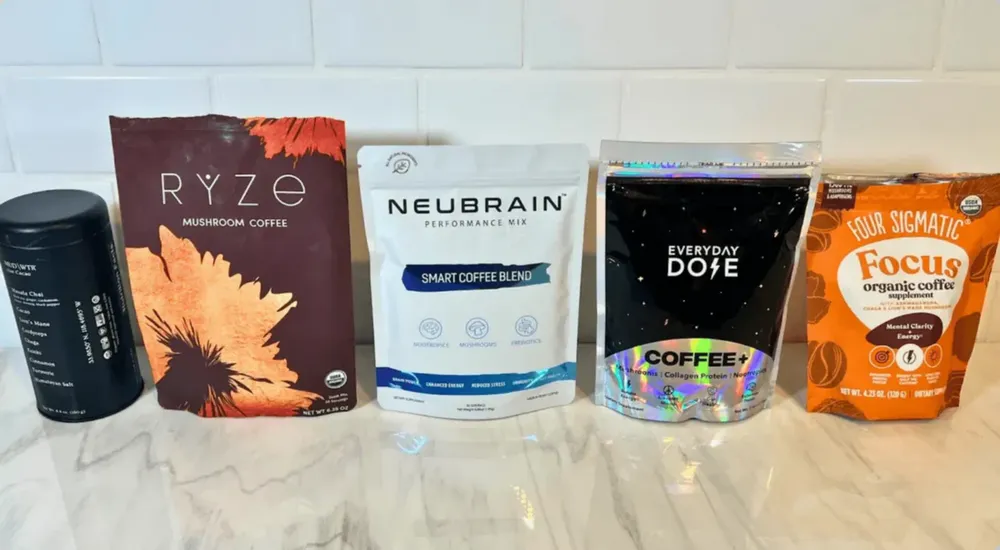
I read a lot of reviews, then bought five popular mushroom coffees and tried them all. Here’s what to check on the label before you buy, and the brand that held up for me.

Not every mushroom coffee is built the same.
You’ve seen these brands everywhere. The labels look alike, but they can differ a lot in what goes into each serving.
The most common complaints in reviews are about taste, an earthy or bitter flavor, and sediment at the bottom of the cup.

And labels that don’t show how much of each ingredient is inside make brands hard to compare.
Knowing what to look for makes the choice much easier.
I’m not a doctor or a nutritionist. I’m someone who ended up with a shelf of half-finished bags and wanted to know what actually separates one brand from another.
So I read the reviews and tried five popular brands. The same complaints came up again and again:
- The taste. Earthy or bitter, not like coffee.
- The cup. Sediment at the bottom.
- The label. Hard to tell how much of each ingredient is inside.
- The caffeine. Often much lower than a regular cup.
Here’s what I found, and what to check before you buy.

What I looked for in all five.
I started with the one-star reviews, then compared each label side by side.
The patterns were consistent enough to turn into a simple checklist.
Check how much of each ingredient is in a serving, not just the list.
Most brands print the full lineup on the front: Lion’s Mane, Cordyceps, Chaga, Turkey Tail, Reishi.
The useful question is how much of each is in a serving. If the label doesn’t say, you can’t compare it.

That was the first thing I checked on every bag.
A full ingredient list is a good start. The amounts are what make it comparable.
Caffeine is the one dose you can check yourself.
An 8-oz cup of brewed coffee has about 96mg of caffeine.

By their own published numbers, many mushroom coffees have about half that, or less.
If you want your coffee to feel like coffee, compare the caffeine number on the label.

Grain-grown mushroom powder can be mostly starch.
Sediment at the bottom of the cup is one of the most common complaints.
A mushroom has two parts: the fruiting body, the actual mushroom, and the mycelium, the root threads underneath.
A label that says “100% fruiting body” is telling you which part you’re getting.
You can also grow the roots on a block of oats or rice, grind up the whole block, grain and all, and still call it mushroom. Nammex, a lab that published testing on this, measured mycelium-on-grain products at up to 66% starch, versus under 2% for real mushrooms.
That’s worth knowing before you buy.

Check the label of any brand you’re considering for “fruiting body” or “mycelium.”
It’s a quick check that tells you a lot.

Before you open another bag, run three checks: how it tastes, what settles at the bottom, and whether you feel anything an hour later.
Three checks, in your own kitchen, on whatever brand is in your cabinet:
- The first sip. Does it taste like coffee you’d pour on purpose?
- The bottom of the cup. Is it clean, or is there sediment?
- The label. Can you see what’s inside and how much?
I ran all five brands through it.
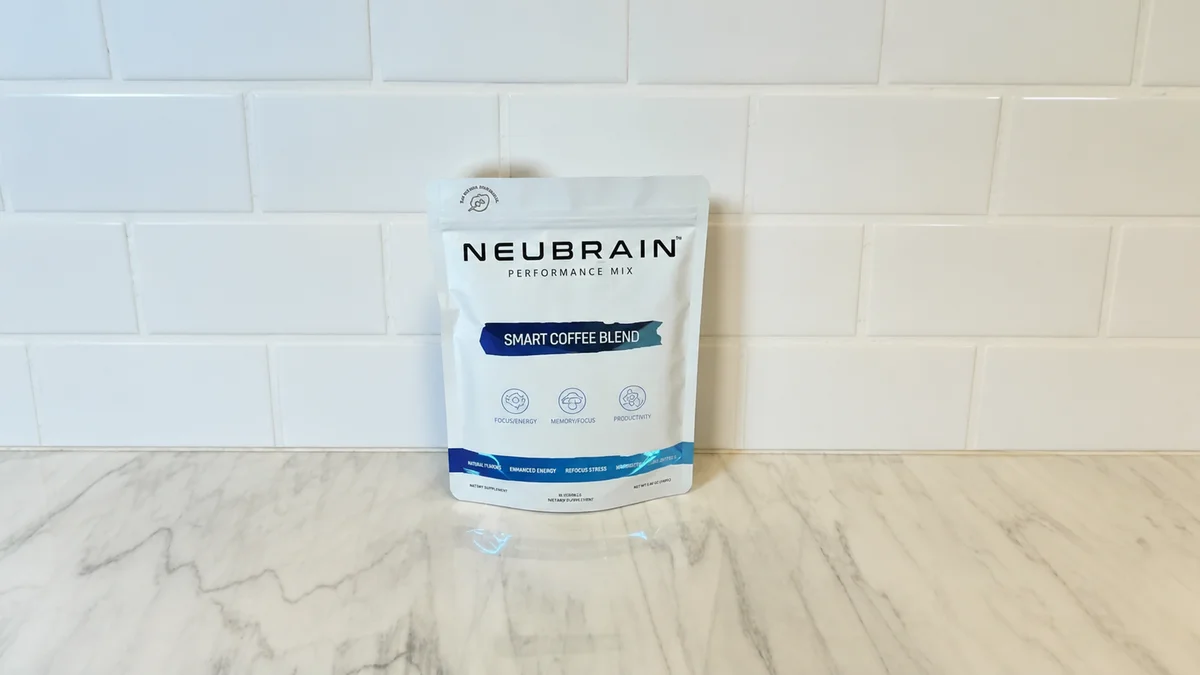
Neubrain was the last one I tried, and the one that held up.
I ordered Neubrain last.
The first sip tasted like actual coffee, dark and smooth. The bottom of the cup was clean, with no grit. And the label showed what was inside.


It checked all three boxes.
So I looked closely at the label.
What’s in each serving.
Here’s what the label shows:
- Five mushrooms, 100% fruiting body, over 2,000mg of 8:1 extract per serving.
- CognatiQ®, studied for its effect on BDNF,6 Alpha-GPC, a precursor to acetylcholine,1 and L-Tyrosine.2,3
- About 115mg of caffeine with L-theanine, a combination studied for focus and alertness.4,5
- BioPerine®, studied for improving absorption.7 And no undissolved grit at the bottom of the cup.
Every batch is third-party tested by Light Labs, an ISO 17025-accredited lab, for heavy metals, mycotoxins, microbials and solvents.
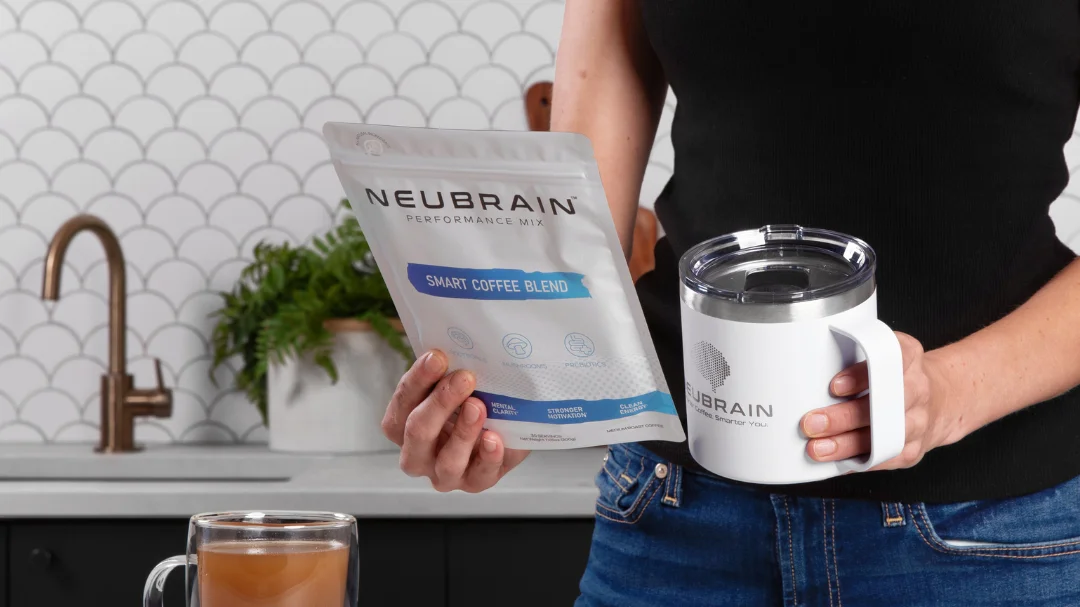
75,000+ customers, many of them switchers.
Neubrain has more than 75,000 customers, and many of them switched from other brands:
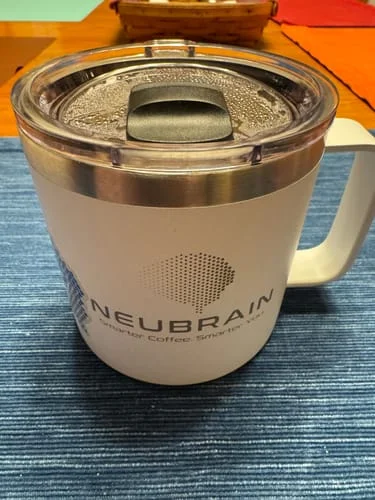
"I tried two other brands before Neubrain. I almost gave up because I couldn't get past the “dirt” taste and all the sediment at the bottom of my cup. Neubrain is a game changer. It tastes great. It's smooth. It mixes great and there's no sediment." · Scott L.
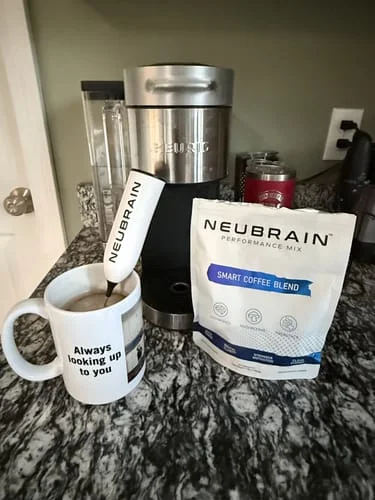
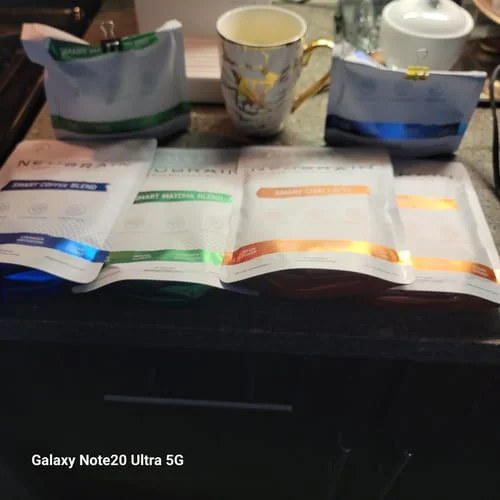
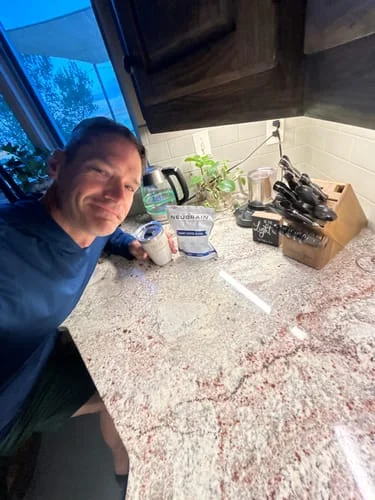
"I love that Neubrain tastes delicious and it dissolves with a quick spin of the frother! From the first sip, I knew I couldn't go back to Ryze!" · Linda K.
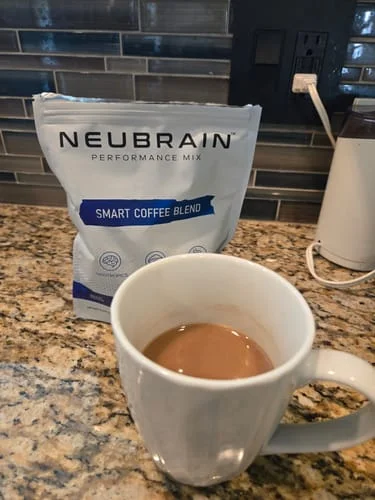
"10 out of 10. Tastes great and gives me much needed focus and energy for the whole day. I've tried other brands and this is by far the best in flavor and action!" · Trendi B.
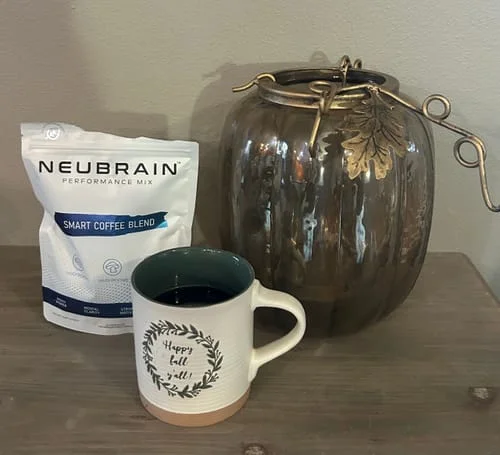
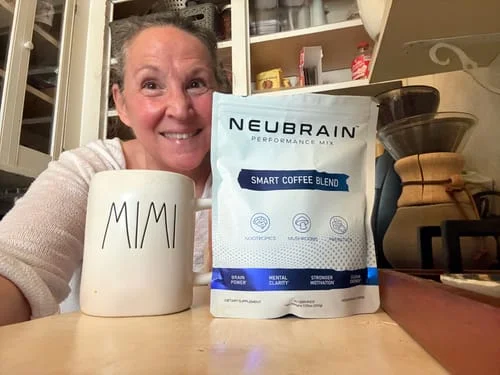
Don’t take my word for it. Try one cup.
If you’re still wondering whether this is just another ad: it is an ad, from Neubrain. So don’t take my word for it.
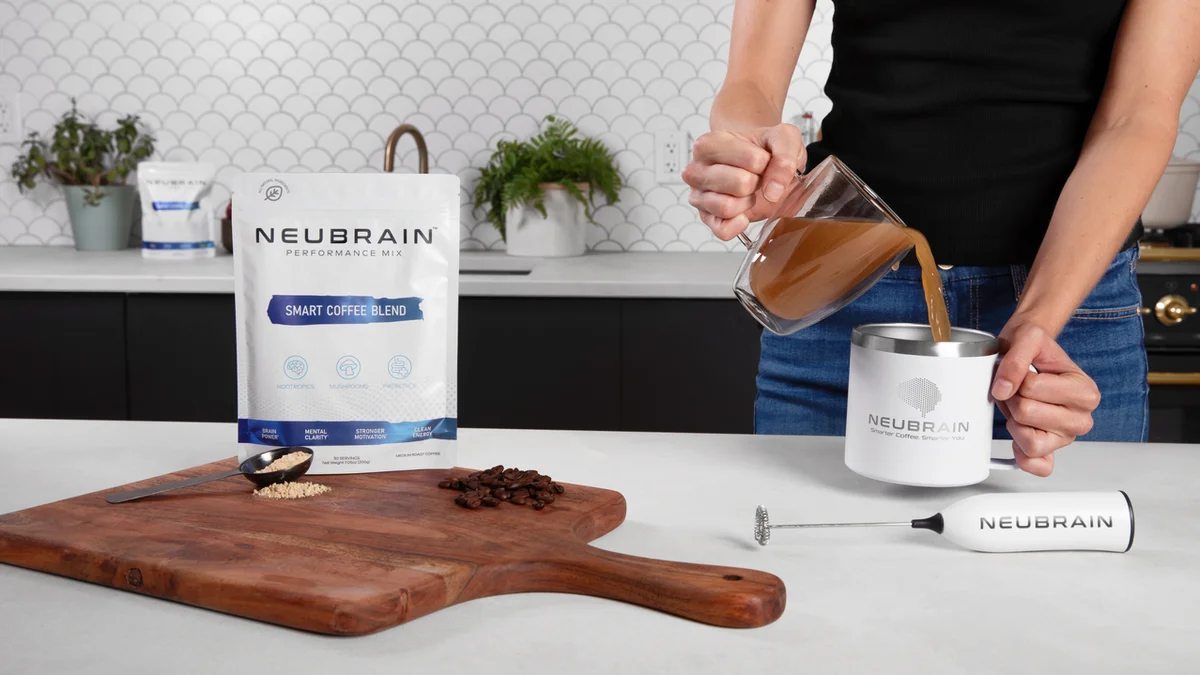
Don't trust me. Test me.
Run the three checks on Neubrain, backed by a 30-day guarantee.
Order one bag. Make a single cup and run the same three checks: does it taste like real coffee, is the bottom of the cup clean, and can you see what’s on the label?
If it’s not for you, reach out within 30 days and get your money back.
Your morning coffee is happening either way. It might as well be one you can read the label on.

UP TO 45% OFF + FREE GIFTS
Up to 45% off, with free gifts and free shipping on qualifying bundles.
GET UP TO 45% OFFStraight answers before you buy.
Will it taste like coffee? It’s a medium roast with real coffee aroma, and it dissolves without grit or sediment.
How much caffeine is in it? About 115mg per serving, paired with L-theanine.
What if it’s not for me? You’re covered by a 30-day money-back guarantee.


