FREE PRODUCTS
  VIP STATUS
  DISCOUNTS
  REFERRAL BENEFITS
  FUN, FUN, FUN!
  GROW YOUR REWARDS
  ALL NATURAL INGREDIENTS

Science Behind the Gut-Brain Axis Explained Simply
The idea that your gut affects your brain used to sound like alternative medicine. Today, it’s one of the most studied areas in neuroscience and metabolic health.
If you’ve ever felt brain fog after a heavy meal, noticed anxiety disrupt digestion, or experienced clearer thinking when your gut feels “right,” you’ve already experienced the gut-brain axis in action.
At its core, the gut-brain axis is not a metaphor. It’s a real, biological communication system — and understanding it explains a surprising amount about focus, stress, and sustained mental performance.
What the Gut-Brain Axis Actually Is
The gut-brain axis refers to the continuous, two-way communication between your digestive system and your brain.
This communication happens through several interconnected pathways that operate simultaneously. Your brain sends signals to your gut, and your gut sends signals back — constantly, not occasionally.
The primary communication channels include:
-The vagus nerve, which directly links the gut to the brain
-Hormonal signaling that influences mood and alertness
-Immune system messengers that affect inflammation
-Neurotransmitters produced or regulated in the gut
This is why digestion, mood, focus, and stress rarely exist in isolation. They are biologically intertwined.
This foundational relationship is explored further in What Your Gut Says About Your Brain and The Shocking Link Between Gut Health and Brain Fog.
Why the Gut Has Such a Strong Influence on Mental Clarity
One of the most important reasons the gut influences the brain is that it plays a central role in neurotransmitter regulation.
While neurotransmitters are often associated with the brain, many of them are either produced in the gut or heavily influenced by gut bacteria. Serotonin is the most well-known example, but it’s not the only one.
When the gut environment is balanced:
-Neurotransmitter signaling is more stable
-Inflammatory signals remain controlled
-The nervous system operates more efficiently
When the gut is disrupted, the brain often pays the price — not immediately, but gradually, through fatigue, fog, and reduced cognitive resilience.
This helps explain why people chasing focus through stronger stimulants often feel worse over time rather than better.
The Microbiome: Your Gut’s Control Center
The microbiome refers to the trillions of microorganisms living in your digestive tract. These microbes aren’t passive passengers — they actively influence how your body and brain function.
A healthy microbiome helps:
-Regulate stress responses
-Support immune balance
-Maintain consistent energy signaling
-Protect the gut barrier from inflammation
When the microbiome becomes imbalanced, communication along the gut-brain axis becomes distorted. Signals that should be calming or stabilizing can instead amplify stress and mental fatigue.
This is why gut health trends continue to gain attention, as discussed in Gut Health Trends to Watch in 2025 and The Mental Health Benefits of a Healthy Microbiome.
How Stress Travels From the Brain to the Gut — and Back Again
Stress doesn’t move in one direction.
When the brain perceives stress:
-Digestive processes slow
-Gut barrier function can weaken
-Inflammatory signaling increases
Those changes in the gut then send signals back to the brain, reinforcing:
-Mental tension
-Difficulty concentrating
-Heightened sensitivity to caffeine and stimulation
This feedback loop explains why stress can feel “stuck” and why addressing only the mind or only the body often falls short.
It’s also why approaches that support calm, sustained energy tend to outperform aggressive stimulation, a concept explored in Mushroom Coffee and Stress: How It Helps Calm the Mind.
Gut Health and Energy: Why Jitters Happen
Many people assume caffeine jitters are purely a nervous system issue. In reality, the gut plays a major role.
When the gut is irritated or inflamed:
-Caffeine is absorbed less predictably
-Stress hormones spike more easily
-Energy feels sharp instead of smooth
This is why people with gut imbalance often report that coffee suddenly “stops working” or feels overwhelming.
Supporting the gut-brain axis allows energy to feel:
-Cleaner
-More controlled
-More sustainable
This relationship is outlined more practically in How to Get Energy Without the Jitters and Gut Health and Energy: The Overlooked Connection.
Where Nootropics and Functional Coffee Fit In
Traditional coffee stimulates the nervous system directly, often without supporting the systems that regulate that stimulation.
Functional coffee approaches focus on:
-Smoother energy curves
-Reduced stress signaling
-Better tolerance over time
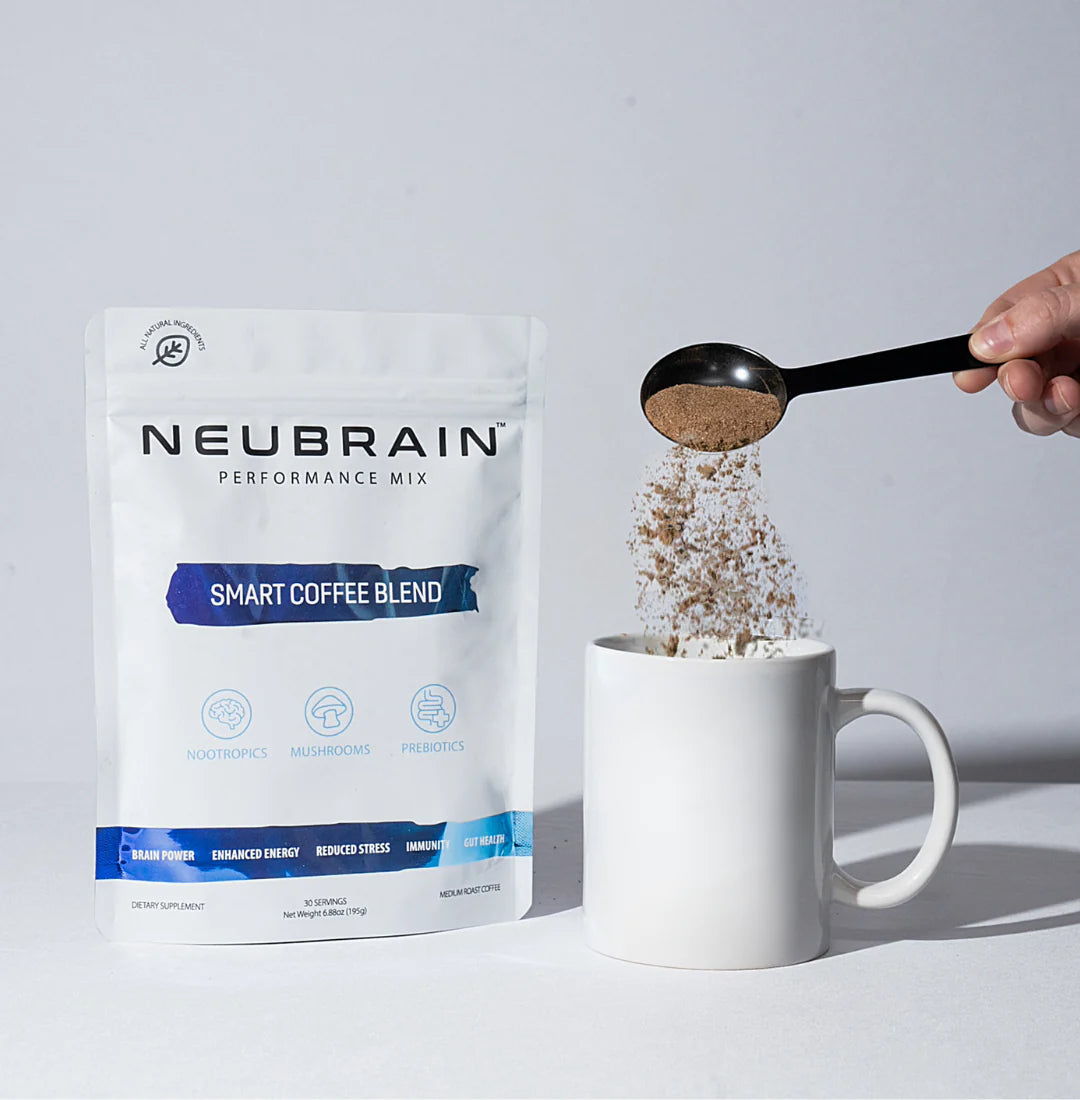
This is where Neubrain fits naturally. Rather than overwhelming the system, it’s formulated to support:
-Mental clarity without digestive discomfort
-Focus without nervous overstimulation
-The gut-brain connection that sustains performance
Importantly, Neubrain still smells and tastes exactly like real coffee and leaves zero sediment, preserving the ritual while improving the experience.
This balance is explored further in Nootropics vs Caffeine: What’s Really Boosting Your Productivity and How Neubrain Fits Into Your Focus Routine.
Supporting the Gut-Brain Axis in Daily Life
You don’t need extreme protocols to support this system. Consistency matters more than intensity.
Simple habits that support gut-brain communication include:
-Regular meal timing
-Moderated caffeine intake
-Stress-aware morning routines
-Ingredients that support both digestion and cognition
You can see how these ideas integrate practically in How to Build a Morning Routine for Mental Clarity.
The Bottom Line
The gut-brain axis isn’t a wellness buzzword. It’s a foundational biological system that shapes how clearly you think, how steady your energy feels, and how resilient you are to stress.
When the gut is supported:
-Focus becomes easier to sustain
-Energy feels calmer and more predictable
-Mental clarity lasts longer throughout the day
Understanding this connection explains why approaches that support both gut and brain consistently outperform quick fixes.
Better thinking doesn’t start with stronger stimulation — it starts with better communication between the gut and the brain.