FREE PRODUCTS
  VIP STATUS
  DISCOUNTS
  REFERRAL BENEFITS
  FUN, FUN, FUN!
  GROW YOUR REWARDS
  ALL NATURAL INGREDIENTS

How Neubrain Performed in My Daily Routine
I didn’t start Neubrain with the intention of “testing” it.
There was no reset, no detox, no productivity experiment. I didn’t change my sleep, my workload, or my caffeine timing. I simply replaced my usual morning coffee with Neubrain and went about my day.
That was intentional.
Most people don’t overhaul their lives when they try something new. They slot it into whatever already exists. So the only fair way to evaluate Neubrain was to see how it performed inside a normal routine — not an optimized one.
Morning: Familiar, Which Was the Point
The first thing I noticed was how little changed.
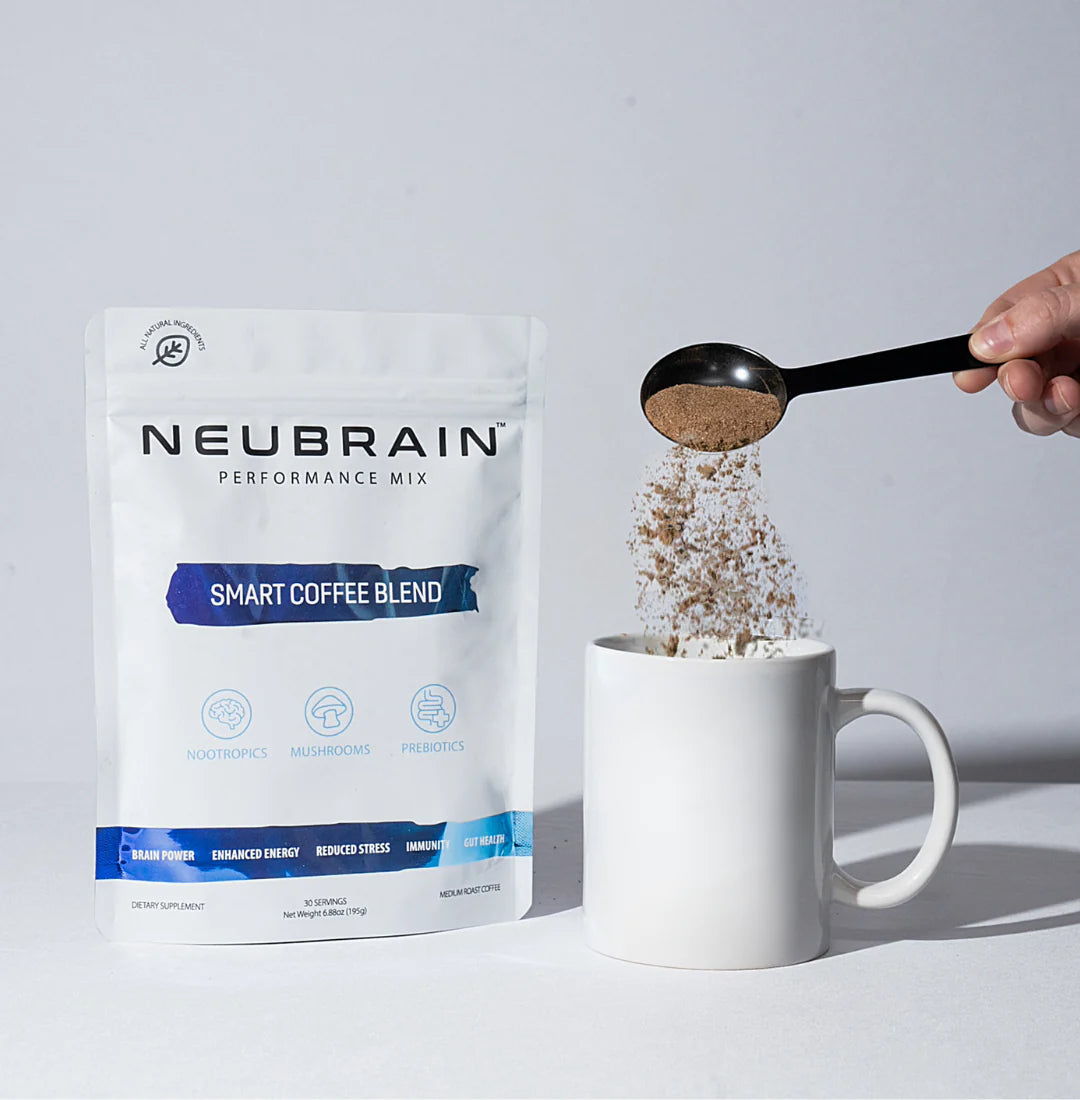
Neubrain smelled and tasted exactly like real coffee and left zero sediment. That mattered more than I expected. There was no mental adjustment, no “this is different” moment, and no sense that I was drinking something functional or experimental.
From a behavioral standpoint, this matters. Research consistently shows that ritual consistency plays a large role in how sustainable a habit is over time. When the ritual stays intact, compliance improves and friction drops.
Energy-wise, the morning felt calm rather than sharp. There was alertness, but none of the urgency or edge that sometimes comes with caffeine. That aligns closely with what’s discussed in Smart Coffee vs Pre-Workout: A Comparison.
At first, that calmness felt underwhelming. In hindsight, it was the first signal that Neubrain wasn’t designed to spike stimulation.
Late Morning: Focus Without Forcing It
As the morning progressed, the difference became easier to notice — not because something appeared, but because something didn’t.
There was less internal resistance starting work. Tasks didn’t require the same push to initiate. Focus felt usable instead of narrow or brittle.
This matches what research shows about cognitive load and stress signaling. When the nervous system isn’t pushed into a fight-or-flight response, attention tends to feel steadier and less effortful rather than intense and short-lived.
This concept is explored more deeply in Science Behind the Gut-Brain Axis Explained Simply, which outlines how stress hormones and neurotransmitter balance influence sustained focus.
Early Afternoon: Where Most Coffee Fails
Early afternoon is where most caffeine routines start to break down.
Typically, this is when energy dips or the urge to stack more caffeine shows up. With Neubrain, neither really happened.
There wasn’t a second “wave” of stimulation. Instead, energy stayed predictable. Focus wasn’t as sharp as peak morning hours — which is normal — but it didn’t collapse.
This aligns with findings that excessive caffeine spikes often contribute to energy volatility later in the day, rather than sustained performance. Studies published through NIH have repeatedly shown that smoother caffeine delivery and reduced stress signaling correlate with fewer afternoon crashes.
The absence of a crash didn’t feel dramatic — but it reduced the need to manage energy altogether.
Late Afternoon: Fewer Decisions, Less Friction
Later in the day, another subtle shift became clear.
There was less mental negotiation. I wasn’t deciding whether I needed more caffeine, wondering if focus was slipping, or debating whether to power through fatigue.
That reduction in decision-making mattered more than expected.
Cognitive science consistently shows that decision fatigue compounds mental exhaustion. When energy feels predictable, fewer micro-decisions are required just to maintain performance.
Neubrain didn’t make the afternoon feel “powered.” It made it feel simpler.
What Didn’t Happen (And Why That Matters)
Just as important as what I noticed was what didn’t happen.
There were no jitters.
No digestive discomfort.
No wired-but-tired feeling.
No sharp comedown.
These effects are commonly reported with traditional coffee and high-stimulant products. Research published in PubMed has shown that gastrointestinal discomfort and anxiety-like symptoms are frequent side effects of rapid caffeine absorption and stress hormone spikes.
Removing those effects didn’t feel like a breakthrough — it felt like relief.
And relief rarely announces itself.
The Real Change Showed Up Over Time
If I had judged Neubrain after one or two days, I might have missed the point.
It wasn’t until the routine repeated — morning after morning — that the value became clearer. Energy felt easier to rely on. Focus required less effort to maintain. There was less need to intervene throughout the day.
This mirrors the experience outlined in How Neubrain Works Over Time (What Most People Don’t Realize at First), which explains why calm clarity often becomes more noticeable as stability replaces stimulation.
Performance wasn’t explosive. It was consistent.
And consistency mattered more than intensity.
How Neubrain Fit Into the Routine — Not On Top of It
One of the most important things Neubrain did was not disrupt anything.
It didn’t require planning.
It didn’t require supplement stacking.
It didn’t demand attention.
It simply replaced coffee and removed friction from the parts of the day where friction usually creeps in.
This is the same principle discussed in If Neubrain Feels Normal Now, That’s the Point — when something works quietly, it stops feeling like a product and starts feeling like infrastructure.
The Bottom Line
Neubrain didn’t transform my routine. It stabilized it.
There were no dramatic moments, no sudden bursts of productivity, and no sense that I was “on something.” Instead, the day felt smoother, calmer, and easier to manage.
That outcome is consistent with what we know from neuroscience and metabolic research: stable energy and reduced stress signaling outperform stimulation over time.
Performance doesn’t always show up as more.
Sometimes it shows up as less effort.
In a daily routine, that’s often the most valuable upgrade you can make.